01
Chandigarh → Shimla / Narkanda
Meet at your agreed airport, station or hotel pickup and begin the mountain journey. Overnight around Shimla or Narkanda.
Winter Spiti, through the mountains of Kinnaur. An extraordinary journey, shaped by the road and the season.
EXPLORE THE JOURNEY ↗Planning a Winter Spiti Valley expedition from anywhere in India? Enquire online with CABHIM about the Chandigarh or Shimla–Kinnaur–Nako–Tabo–Kaza route. Winter access depends on weather and district road advisories; the Manali–Kunzum approach is normally closed in winter.
Shimla and Chandigarh pickup can be discussed, with Delhi pickup also possible by prior arrangement depending on your group, vehicle availability, travel date and final price. CABHIM accepts enquiries from customers nationwide, but a pickup city and route are only confirmed in your written plan.
This page presents approximate 7–9 day itineraries, with planning around Shimla, Kinnaur, Nako, Tabo and Kaza, plus eligible local sightseeing. Exact days, accommodation and stops change with weather, altitude considerations and official road restrictions.
Ask about a suitably equipped CABHIM Manali 4×4 taxi or SUV for winter roads. Vehicle type, actual 4WD specification, tyres, passenger capacity, heating, stays, meals and access are agreed individually. Four-wheel drive does not permit travel past official closures.
Usually not in peak winter. Winter Spiti trips are generally planned via Shimla–Kinnaur–Nako–Tabo–Kaza, subject to the current district road status. The direct Manali–Kunzum approach is normally closed in winter; a 4×4 taxi cannot bypass a closure. See the Shimla to Spiti route guide and request a date-specific plan.
Pricing depends on pickup city, itinerary, group size, vehicle, travel dates, accommodation, meals and duration. We do not claim a fixed all-inclusive price. Use the Winter Spiti booking enquiry to request a confirmed written quote before paying.
Read the Shimla–Kinnaur route guide and check official Lahaul-Spiti road status.
A winter Spiti expedition reveals ancient villages, quiet monasteries and vast winter skies. Travel from Chandigarh or Shimla into Spiti along the Kinnaur approach, with time to experience the mountains at their own pace.
Snow, road access and village visits change with conditions. Every journey is planned around current local advice.
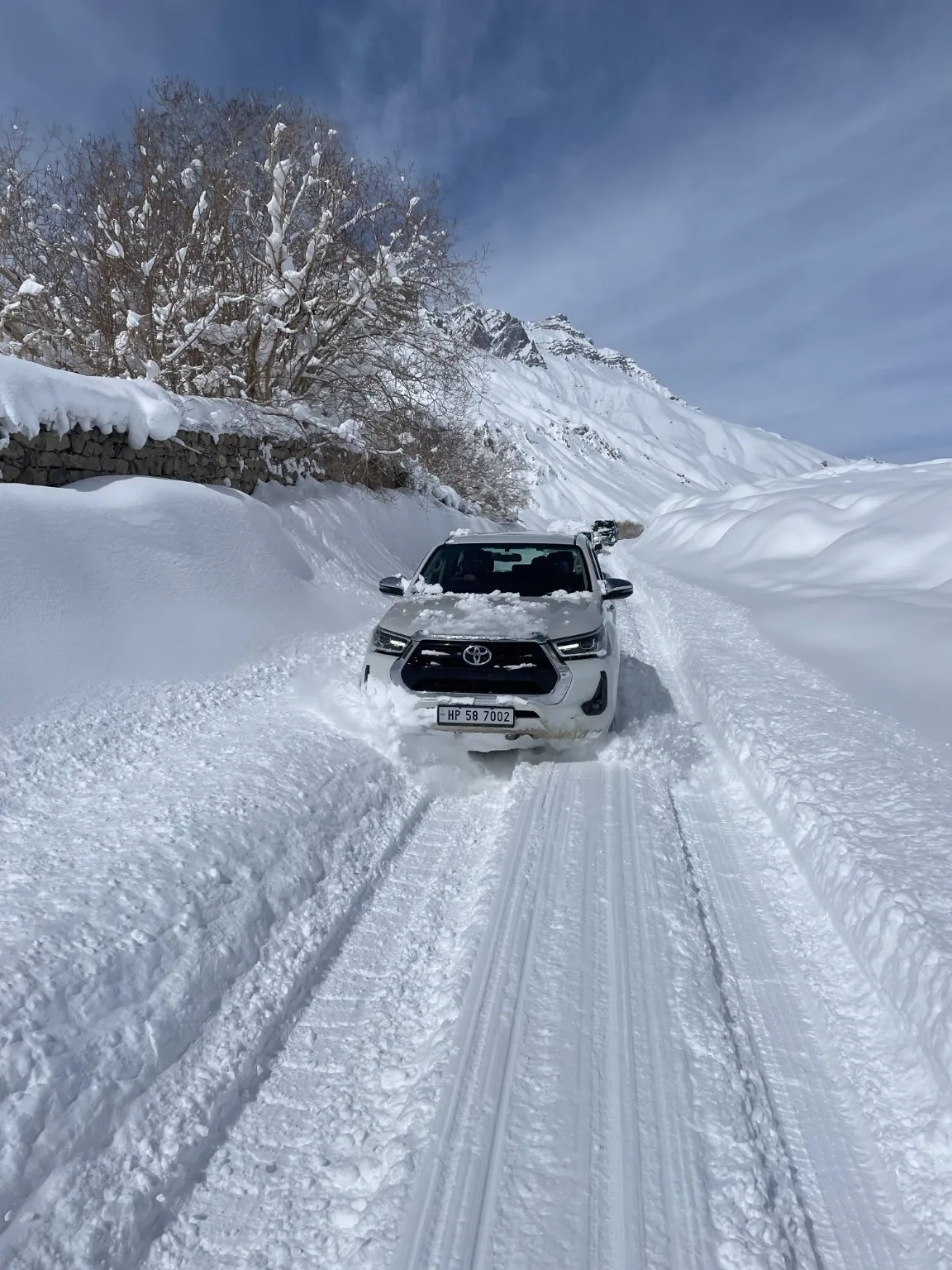
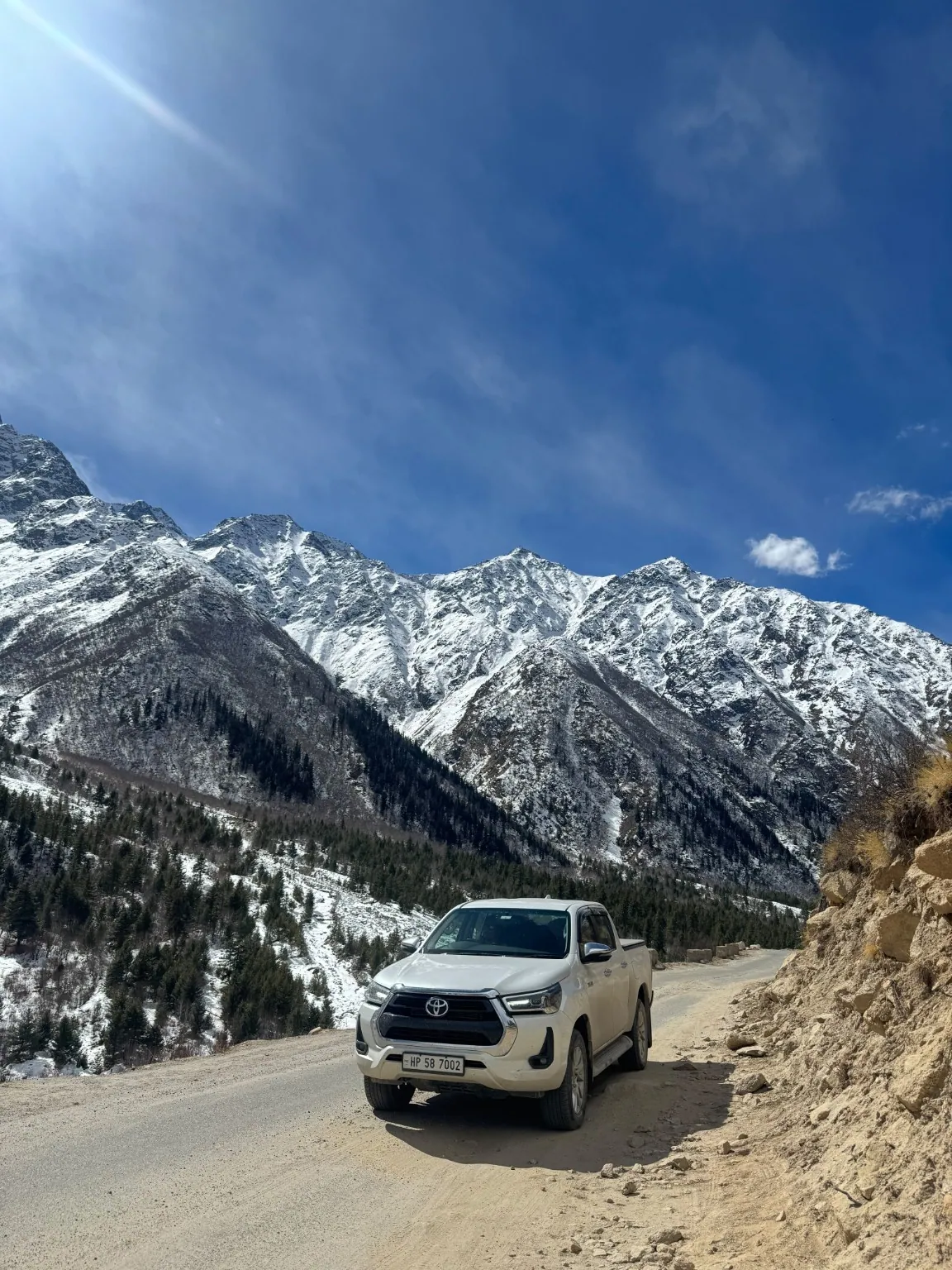
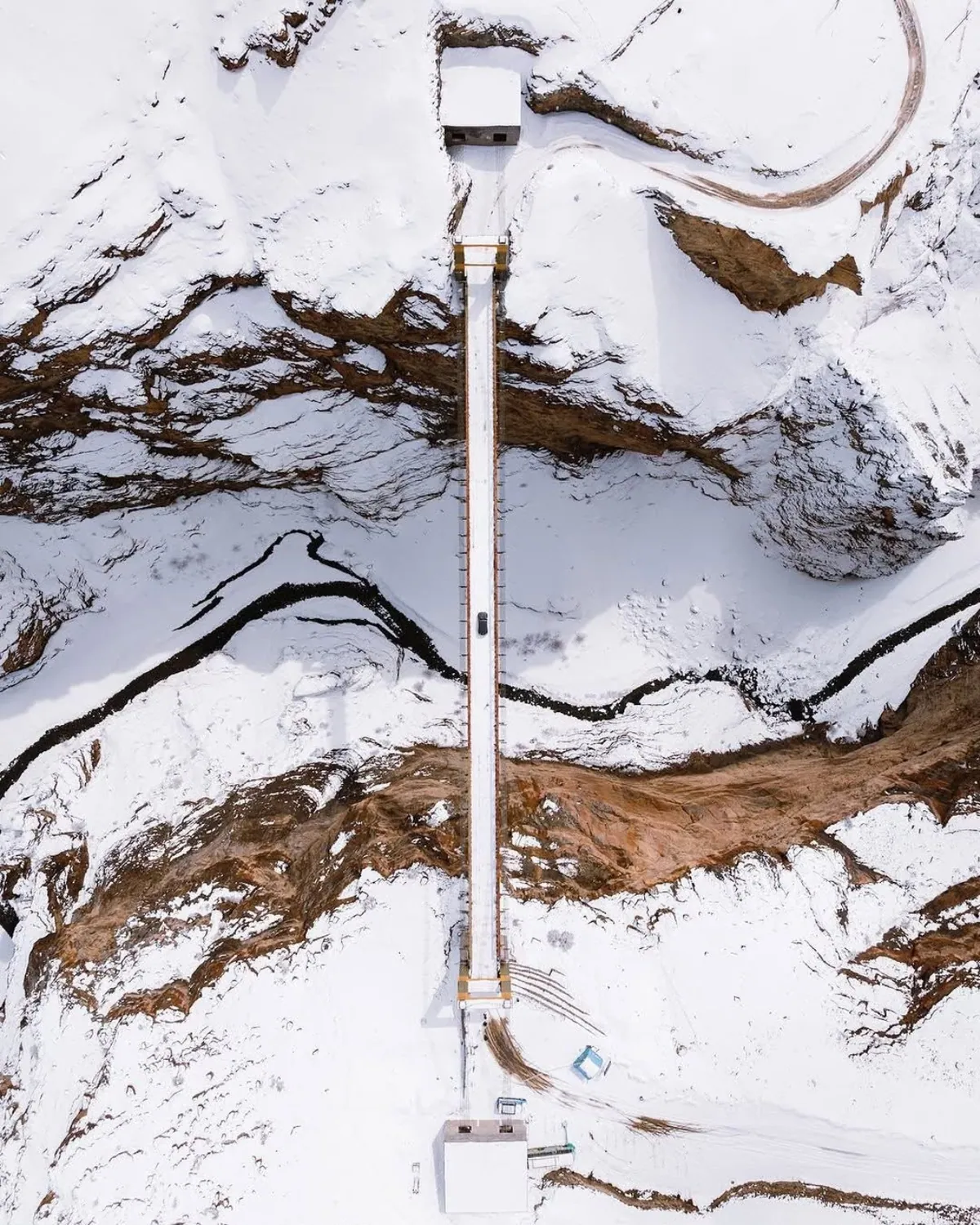
Leave the familiar behind as the mountains rise around you. Every bend brings you closer to the high Himalayas.
Rivers, bridges and quiet valleys shape the journey. The landscape changes with every kilometre and every season.
Snow softens the road and transforms the mountains. Travel at nature’s pace, with a flexible plan for winter conditions.
Follow the winding mountain road into a world shaped by winter, time and the people who call it home.
The journey unfolds at the pace of the mountains. Every turn brings a different perspective.
Explore an illustrative winter itinerary from your pickup city. This is a flexible plan, with time for the mountains, overnight stops and a weather buffer.
Custom tour planner coming soon.
Meet at your agreed airport, station or hotel pickup and begin the mountain journey. Overnight around Shimla or Narkanda.
Drive via Rampur toward Kalpa or Reckong Peo. Take breaks and settle into your confirmed stay.
Follow the Sutlej toward Khab and continue towards Nako and Tabo. Overnight depends on road access, available stays and acclimatisation.
Visit Tabo Monastery if open and continue to Kaza; optional Dhankar is subject to safe access and available time.
Consider Key Monastery, Kibber and Chicham if open. Keep the day flexible and follow local advice.
If safe and accessible, consider Langza, Hikkim or Komic; otherwise rest near Kaza or use the day as a weather buffer.
Begin the return along the same corridor; overnight around Nako or the Kalpa / Reckong Peo area according to conditions.
Travel back via Rampur and Narkanda, allowing for winter delays.
Return to the agreed Chandigarh drop point. Allow extra time for winter road delays.
The route and nights above are planning examples, not confirmed departures. Road closures, altitude, weather and available winter accommodation may change stops or add days. Return is normally via the Shimla–Kinnaur corridor; Kunzum is generally closed in winter. Keep at least one additional buffer day where possible.
Explore our scheduled Winter Spiti departures. Expeditions run for approximately 7–9 days, depending on your pickup point and itinerary. Shimla pickup timing is coordinated for each departure.
These are scheduled fixed departures; a seat is confirmed only after booking. Pickup, itinerary and duration are confirmed individually. Weather or road closures may require changes. Check the latest district road status and local advisories close to departure.
From the forests of Shimla to the vast landscapes of Spiti, the road is part of the experience.
Scenes from the supplied expedition media. Conditions and scenery vary by date and route.
Mountain villages on the approach to Spiti, with changing landscapes along the Sutlej and time to adjust to altitude.
Discover Tabo’s monastery and the valley’s winter life before reaching Kaza, the base for nearby excursions.
Consider Key Monastery, Kibber and Chicham Bridge when local road access and weather allow.
High villages including Langza, Hikkim and Komic are optional visits, subject to snow and safe access.
Sightseeing is flexible; closures may mean choosing a different stop or spending an extra night on the route.
Share your Chandigarh or Shimla pickup and drop location, dates, group size and luggage.
Ask about hotels or homestays, room heating, hot water and meals; facilities and availability vary.
Discuss vehicle availability, suitable tyres and equipment, luggage space and driver arrangements.
Confirm the final price, inclusions, permits, taxes, cancellation terms and costs if weather changes the route.
Discover how our winter convoy is organised and the details to agree before you book.
Dear traveller,
Winter in Spiti is an expedition, and each group deserves a clear plan. Here is how we organise the journey and what to confirm for your departure.
Expedition manager Mohit Thakur brings experience from multiple expeditions and helps coordinate the team, brief guests and adjust plans when conditions change.
The lead vehicle sets the group’s pace and coordinates the route and stops. A sweep vehicle follows at the back, monitors the group and communicates delays so the convoy can regroup.
Walkie-talkie communication is planned between convoy vehicles. Equipment, coverage and the final vehicle arrangement are confirmed for each departure.
Choose a Chandigarh or Shimla pickup and discuss your 7–9 day itinerary, group size, luggage and suitable vehicle. Winter road access decides which stops are possible.
Ask for the proposed hotel or homestay, room sharing, heating, hot water and meals in your written quote. Winter facilities and availability vary by location.
Request a clear list of included fuel, driver charges, tolls, parking, permits, entry fees, safety equipment and applicable taxes. Confirm whether insurance, lunches, personal expenses and extra nights due to delays are included or additional.
Snow, black ice and official restrictions may change the route or timing. Discuss the weather-delay, cancellation and additional-cost terms before paying, and allow time after your trip for delays.
Final inclusions, exclusions, accommodation, equipment, price and seat availability are confirmed in your individual booking. This letter is a guide, not a guaranteed package list.
Our winter expeditions are organised around coordinated convoy travel. Each vehicle has a place in the group, with the expedition team keeping in touch and adapting the plan to the road ahead.
The lead vehicle sets the pace and coordinates the planned route, stops and instructions for the group, based on prevailing conditions and local guidance.
The convoy is planned with walkie-talkie communication between vehicles so the team can coordinate progress and stops. Equipment and coverage will be confirmed for your departure.
A sweep vehicle travels at the back, monitors the group and communicates delays or issues to the lead team so everyone can regroup where appropriate.
Mohit brings experience from multiple expeditions and knowledge of mountain travel to the planning and coordination of our winter journeys. He helps organise the team, brief guests and adjust the plan as conditions require.
The exact convoy setup, vehicle allocation, equipment and support arrangements are confirmed for each departure. Weather and official road restrictions may change the itinerary.
Winter travel is generally planned around December to March, but snowfall, temperatures and accessibility vary by season and day. Fresh snow is never guaranteed.
Ascend gradually, stay hydrated and leave room to rest. Headache, nausea or unusual breathlessness can be signs of altitude illness. Do not continue climbing with worsening symptoms; seek medical advice and descend when needed.
Hotels and local homestays can be limited. Ask about room heating, hot water, electricity backup, bathroom type and meal arrangements before confirming.
Request a suitable vehicle for your group, luggage and the expected road conditions. Ask about winter tyres or chains and driver arrangements. A 4×4 cannot guarantee passage on a closed road.
Mobile signal and digital payments can be unreliable in remote areas. Download essential information beforehand and carry sufficient cash for small local expenses.
Carry thermal layers, an insulated jacket, gloves, warm socks, water-resistant footwear, sunglasses, sunscreen, personal medicines and a power bank.
Expect simple seasonal meals and ask ahead about dietary needs. Be respectful at monasteries and villages; ask permission before photographing people.
Carry valid identification. Permit requirements vary by nationality and itinerary; ask CABHIM to check the latest official requirements before booking.
Ask for a written quote covering vehicle, fuel, driver, accommodation, meals, tolls, parking, permits, taxes and extra nights. Confirm cancellation and weather-change terms.
Locations, facilities, snow and services are subject to current local conditions and written confirmation.
Winter here is beautiful and unpredictable. Tell us your dates, group size and pickup point so we can discuss a suitable plan.
The usual winter approach is through Shimla and Kinnaur towards Nako, Tabo and Kaza, subject to road and weather conditions. The Manali–Kunzum route is generally closed in winter.
Visits depend on local road access, weather, vehicle suitability and official guidance. A flexible day gives your group more options.
Bring warm layers, insulated footwear, gloves, sun protection and personal medication. Discuss altitude acclimatisation and any health concerns with a clinician before travelling.
Vehicle type, accommodation, heating, meals and inclusions are confirmed in your individual quotation. Availability can vary in winter.
Choose your starting point, gather your group and begin planning a journey into the winter Himalayas.
ENQUIRE WITH CABHIM ↗Tell us your pickup location, travel dates and group size to discuss availability.
CABHIM · Related journeys
Explore road-access guidance and related CABHIM journeys before enquiring. Winter access depends on local conditions.